March 16, 2026
We often notice a genuine excitement when we see an art collector engage. It’s the way they talk about a work they are considering or have recently acquired, an artist they have just learned about, an art fair they’re excited to visit. There is a particular energy in those moments—when someone shares what drew them to a piece, what they see in it, how it makes them feel and why they want to live with it.
We feel the same kind of excitement when we’re building a client collection and we’ve found the right artist and artwork that meets the moment. What we’ve discovered is there is a special alchemy that blends experience and instinct in the process of acquiring. And then, beneath that, there is a quieter, more potent question that we return to again and again:
What are we really collecting when we collect art?
Over time, we’ve realized that collecting is rarely just about the object itself. It is also about the ideas, histories, and relationships that gather around it.
The impulse to collect is not new. In ancient civilizations, people gathered objects associated with knowledge, ritual, and power. Collections preserved memory and helped shape what a society believed was worth keeping.
In many ways, that dynamic continues today.
Every time a collector, institution or corporation acquires a work, they are making a small but meaningful decision about significance. They are saying that this artist, this moment deserves to be carried forward.
As artworks accumulate, something interesting begins to happen. A collection slowly becomes a conversation. Pieces made in different regions begin to speak to one another. Works created years apart may reveal shared concerns. A group of objects begin to tell a story about the time in which they were collected, even as the conditions around which the artwork is displayed may change.
We see this often in both corporate collections and private collections. What begins with a few works that fulfilled a project brief, or that someone simply loved, gradually evolves into something more intentional. New patterns emerge. Questions arise. Discernment sharpens. Curiosity starts to shape new and more refined collection themes.
The stories around the art that remain and evolve are shaped by a myriad of decisions made today. In this sense, a collection is never solitary or static, it’s alive and built in community by all those that come into contact with it. Maybe what we’re really collecting then are a constantly renewing constellation of meanings, woven together through time.
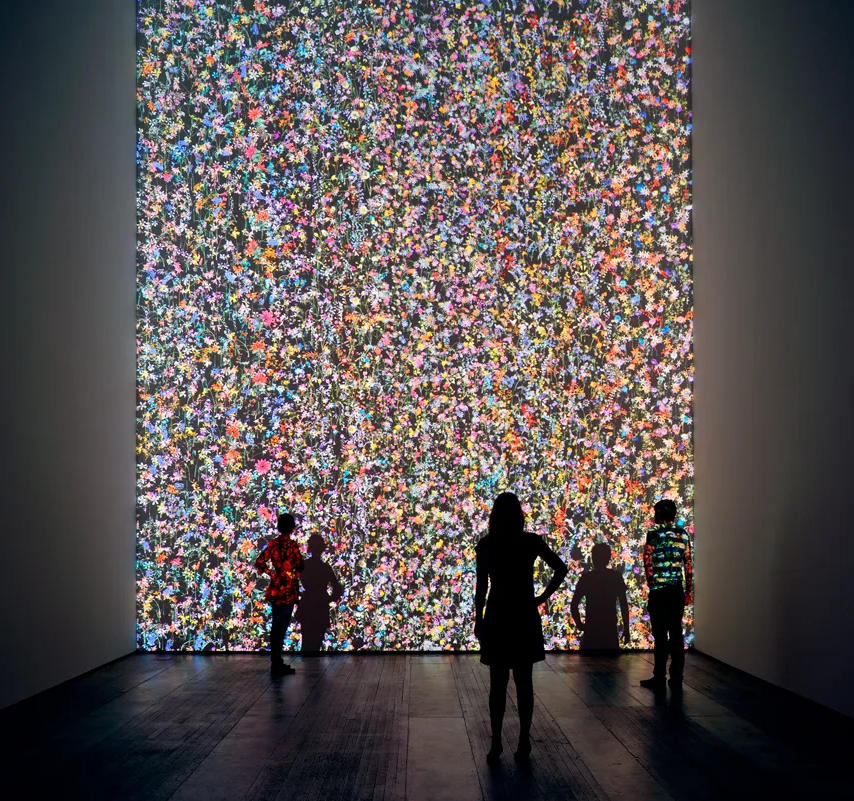
Jennifer Steinkamp, Daisy Bell, 2008, video projection, edition 1/1, Bank of America Art Collection, photo credit: Robert Wedemeyer, Courtesy Lehmann Maupin (New York and Hong Kong)